
Safety · Evidence-led
Is Rishikesh Rafting Safe? A 2026 Reality Check
Yes — when booked with a verified operator. The 5 things that determine actual safety, and the 7 questions to ask before you pay.
Published May 19, 2026 · ~7 min read
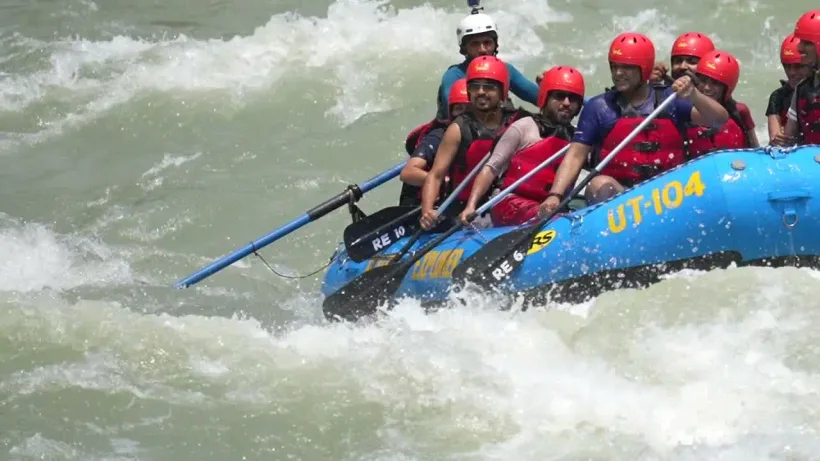
Yes — Rishikesh white-water rafting is safer than alpine skiing and broadly comparable to recreational scuba diving when you book with a verified operator. The actual risk depends on five specific factors: operator licensing, gear standards, guide certification, safety-kayaker shadowing, and GPS tracking. Every accident the river sees is almost always tied to one of these five being absent. Here is how to check all five before you book.
This is not a marketing piece. The internet is full of "Rishikesh rafting is safe!" articles written by operators selling trips. The honest answer is: it is safe when the operator is doing their job, and dangerous when they are not. Here is what you need to verify — and the questions to ask before you hand anyone money.
How dangerous is Rishikesh rafting, really?
Recreational white-water rafting on Grade III–IV rivers — the grades you find on Rishikesh's Marine Drive and Shivpuri stretches — has a serious-injury rate lower than alpine skiing and comparable to recreational scuba diving, per data published by international rafting federations. Fatalities are rare, but they are not zero. When they happen, they almost always involve one or more of the following:
- An unlicensed operator running during the official monsoon closure (July to mid-September), when water levels are unsafe
- No safety kayaker shadowing the raft
- Life jackets that are old, poorly sized, or not certified whitewater
- A raft running a rapid above its safe operating grade
- An inexperienced guide who has not been briefed on the day's water conditions
Rishikesh has hundreds of rafting trips run every day during the open season. The platform-level operator count alone is 300+ verified operators, with 600+ rafts active across eight launch points between Brahmpuri and NIM Beach. The base rate of trips run safely is overwhelmingly high. The question is not "is rafting dangerous in the abstract?" — it is "is the specific trip I am about to book run by an operator doing safety properly?"
The 5 things that actually determine safety
1. Is the operator licensed by Uttarakhand Tourism?
Every legal Rishikesh rafting operator holds a permit issued by the Uttarakhand state tourism authority. The permit covers river access, designated put-in and take-out points, gear standards, and a closed-season ban (July 1 to September 14 inclusive).
Unlicensed operators do exist — they undercut licensed prices, run trips during the monsoon closure, and operate from informal launch points. The cheapest "₹300 to ₹600" Rishikesh rafting deals you see on bank-side touts almost always come from this category. A ₹300 raft trip in Rishikesh is not a deal — it is a risk.
Verifying the licence is simple: ask the operator for their permit number before booking. Verified operators will share it without hesitation. Unverified ones will deflect.
2. Is the gear certified whitewater and recent?
The two pieces of gear that decide whether you survive a swim are the life jacket and the helmet.
- Life jackets must carry a recognised whitewater PFD certification — ISI-marked (Indian Bureau of Standards) on gear from Indian outfitters, or international equivalents (USCG Type III/V, CE, EN) on imported gear. All meet whitewater certification floors. What matters beyond the certification is that the jacket fits snugly under the arms — a loose jacket can ride up over your face in fast water. Useful life is around three to five years before the foam degrades and buoyancy drops.
- Helmets must have an intact chin strap and an unbroken outer shell. A helmet with a hairline crack does not protect.
When you arrive at the put-in, look at the jackets stacked on the raft. If they are visibly worn, sun-bleached, or have torn buckles, ask for replacements before you launch. A verified operator carries spares. An unverified one will tell you "it is fine, brother."
3. Is the guide certified (and what does "certified" actually mean)?
The word "certified" is used loosely in the Rishikesh trade. What matters in practice:
- Has the guide been trained in swift-water rescue? (Not the same as a swimming certificate.)
- Has the guide run this specific stretch of the river at least 50 times? (River reading is route-specific.)
- Is the guide capable of giving a clear pre-trip safety briefing in your language?
If the briefing is rushed, skipped, or delivered in a language no one in the raft understands, that is a red flag. A verified guide spends 8 to 12 minutes briefing the raft on paddle commands, swim position, line-throw recovery, and the specific rapids of the day before pushing off.
4. Is there a safety kayaker shadowing your raft?
The single most under-appreciated safety control on the Ganga is the kayaker shadow — a solo kayaker who paddles alongside your raft for the duration of the trip. If a rafter goes overboard in a rapid, the kayaker reaches them in seconds, well before any raft-based rescue is possible.
Not every operator runs a kayaker shadow on every trip. The ones that do run it routinely tend to be the operators worth booking with. Ask the question before you pay: "Is there a safety kayaker with my raft for the full trip?" If the answer is "depending on group size" or "sometimes", that is a no. RaftingX's safety standards require a kayaker shadow on every verified trip.
5. Is the trip GPS-tracked?
GPS tracking does not prevent accidents — but it cuts response time when things go wrong. A trip that is tracked in real time means:
- The operator's base knows the raft's location at every rapid
- A family contact (yours, if you share the tracking link) can follow the trip live
- In the event of an incident, rescue teams know exactly where to go
GPS tracking is a recent platform-level addition to Rishikesh rafting — not every operator runs it yet. Verified operators on RaftingX do, and the tracking link is shareable with the booking party before the raft launches.
Why monsoon rafting is closed — and why you should respect it
From July 1 to September 14, all rafting on the Ganga between Brahmpuri and Rishikesh is closed by Uttarakhand state order. This is not a guideline — it is a legal closure backed by the licensing authority.
The reason is straightforward: the Ganga's water level during monsoon rises by 4 to 6 metres above the season norm. Rapids that are Grade III in October become unrunnable Grade V to VI walls of water. The bank itself is unstable. The official safety infrastructure that supports rafting in the open season — the kayakers, the river-side rescue posts, the bank-side ambulance staging — is stood down because the conditions exceed their design envelope.
Operators who run monsoon trips are unlicensed by definition. They are also the operators most likely to skip the other four factors above. If a tour operator offers you a Rishikesh rafting trip between July and mid-September, walk away. The trip is not legal, the operator is not insured, and the risk profile is fundamentally different from what this article is about.
The 7 questions to ask any operator before booking
The five factors above, condensed into questions you can ask on WhatsApp or at the counter. If the operator answers four or five of these confidently, you are in safe hands. If they answer two or fewer, book somewhere else.
- What is your Uttarakhand Tourism rafting permit number? Every legal Rishikesh rafting operator holds a permit issued by the Uttarakhand state tourism authority. A verified operator will share their permit number on request without hesitation. An unverified one will deflect — that is your first red flag.
- What life-jacket certification should I look for, and what year were they manufactured? Look for either ISI-marked whitewater life jackets (Indian Bureau of Standards certification) or international equivalents — USCG Type III/V (US), CE / EN (Europe). All are recognised whitewater PFD standards moulded or printed into the jacket itself. Useful life is around three to five years before the foam degrades and buoyancy drops. Ask the operator to confirm the certification and the manufacturing year before you launch.
- What swift-water rescue training has my guide completed? Look for a specific course name — not a generic "many years of experience" answer. Swift-water rescue training is a recognised course and is separate from a swimming certificate or a general river guide endorsement.
- How many times has my guide run this exact stretch of the Ganga? River reading is route-specific. A guide who has run Marine Drive 200 times may still be new to Shivpuri. Ask for the count on the specific stretch you are booking, and look for at least 50 prior runs as a working floor.
- Is there a safety kayaker shadowing my raft for the full trip? The kayaker shadow is a solo kayaker who paddles alongside your raft for the duration of the trip. If someone goes overboard in a rapid, the kayaker reaches them in seconds, well before any raft-based rescue is possible. Look for a clear yes — answers like "depending on group size" or "sometimes" are effectively a no.
- Will I receive a GPS tracking link before launch? GPS tracking does not prevent accidents, but it cuts response time when something goes wrong. A tracked trip means the operator base knows the raft location at every rapid, and a family contact can follow the trip live. Verified operators on RaftingX share a tracking link with the booking party before the raft launches.
- What is your emergency response protocol if a rafter is injured? Listen for the specifics — kayaker first response, line-throw recovery, evacuation route to the closest take-out, and bank-side phone contact for ambulance staging. An operator who can describe the protocol clearly has thought about it. One who cannot has not.
How RaftingX verifies every operator
The five factors above are the same five RaftingX checks before listing any operator on the platform. The verification is done in person by the founding team, not delegated to a form — the founder physically inspects gear, watches a briefing, and rides a trip with the operator before they are added.
See the full RaftingX safety standards for the platform-level details — what we check, how often we re-check, and how we handle operators who fall below standard mid-season. The short version: an operator who fails a re-check is removed from the platform until they fix what was found.
This is also why RaftingX does not run "₹599 mega-deal" promotions — the price floor exists to keep verified operators above their actual cost of running safety properly. A ₹599 trip cannot pay for a certified whitewater life jacket (ISI-marked) replacement cycle plus a dedicated safety kayaker plus a fully-trained guide. The market clears at higher prices for a reason.
What to do if something goes wrong on the river
Most rafting incidents are minor — a swim out of the raft on a Grade III rapid, a bruised shin from a rock, a paddle to the face from a raft-mate. The recovery for these is built into the trip:
- If you swim: Float on your back, feet downstream, toes up. The life jacket does the work. Wait for the safety kayaker or a line throw from the raft.
- If the raft flips: Stay calm, find the upstream side, hold the perimeter rope. The guide and kayaker will right the raft within a minute on most rapids.
- If you are injured: The guide assesses on-water and decides whether to continue to the next take-out or evacuate to the closest bank. RaftingX-verified operators have phone contact with bank-side support for ambulance evacuation if needed.
The key information your family needs in advance: the operator's name, the put-in and take-out locations, the trip's GPS link if available, and the operator's emergency contact phone. Share these before you launch.
Ready to book a verified operator? See the routes side by side — Brahmpuri is the gentlest if you are new to the river; Marine Drive is the full-day expedition for confident rafters. Check what to wear before you go. Every operator on RaftingX has been checked against all five safety factors above before being listed.
Book on WhatsApp →