

Planning · First-timer guide
What to Wear Rafting in Rishikesh — A First-Timer's Complete Guide
Quick-dry, sun-safe, and what the operator provides — by season, by route.
Published May 19, 2026 · ~7 min read
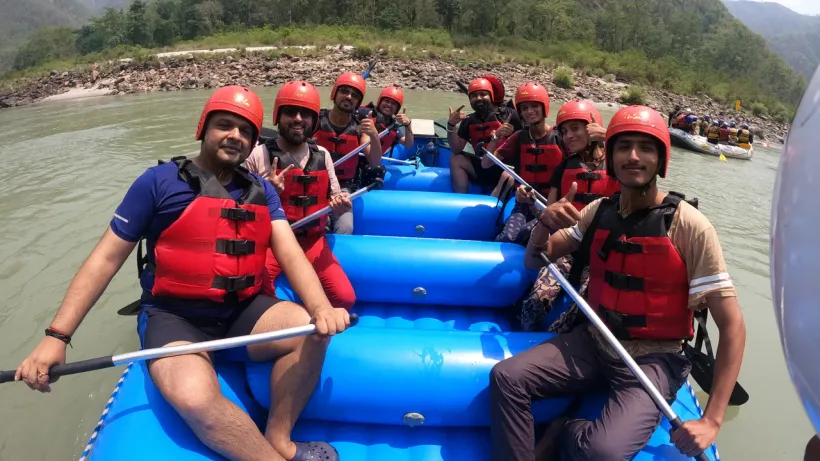
For Rishikesh rafting, wear quick-dry shorts or sport leggings, a snug synthetic t-shirt, and sports sandals with secure straps. Avoid cotton (stays wet for hours), loose flip-flops (lost in the first rapid), and anything you can't afford to lose. The operator provides helmet, life jacket, and paddle. Skin protection — sunscreen, lip balm, sunglasses with a retainer strap — matters more than most first-timers realise, because the Rishikesh canyon reflects sun off the water for four to seven hours.
This guide is the packing list we wish every first-time rafter had read before they got to the river — by category, by season, by route, with the five small things that go wrong on most trips and how to avoid them.
The full packing list — by category
Rishikesh rafting is wetter than people expect. Even on a calm half-day, you will be splashed on every rapid and soaked through by lunch. The packing list works backwards from that: minimise what gets ruined, maximise what dries fast, and trust the operator to provide the safety gear you actually need.
What to wear on the river
- Quick-dry shorts or sport leggings. Synthetic only. Avoid denim, chinos, cotton tracksuits.
- A snug-fit synthetic t-shirt or rash guard. Loose cotton stays heavy and cold.
- Sports sandals with heel straps. Floaters, water-shoes, or hiking sandals all work. Flip-flops do not — you will lose them.
- A swimsuit underneath, especially in March–June. You will end up in the water deliberately at some point.
- Sunglasses on a retainer strap. Without the strap, the first wave takes them.
What to bring in a dry bag
The operator usually provides a small dry bag on the raft, but it is shared and limited. Bring:
- Sunscreen (SPF 50, reef-safe if you care) — apply before you launch and once at the mid-point break.
- Lip balm with SPF. The canyon dries lips faster than most people expect.
- A small towel for the take-out.
- A complete change of clothes sealed in a separate plastic bag for the drive back. Underwear included.
- Cash for the photographer / tip — most operators offer GoPro photos for ₹500–₹1,500. ATMs are rare near the put-in.
- A waterproof phone pouch if you must bring your phone. We strongly suggest you don't.
What to leave at the hotel
- Watches, jewellery, anything sentimental.
- Wallets and original ID — carry one photo ID copy and a small amount of cash.
- Loose hair clips, expensive sunglasses, anything that detaches.
- Contact lens cases (wear lenses if you have to, but a pair lost mid-rapid is a pair lost).
- Hotel room keys — most operators lock these in the office, but check before you launch.
What the operator provides
Every verified operator on the river provides the same three pieces of safety gear, no exceptions:
- certified whitewater life jacket (ISI-marked or international equivalent), sized to your chest. If it does not fit snugly under the arms, ask for a swap before launch — a loose jacket can ride up over your face in fast water.
- Helmet with a chin strap. Tighten it; helmets that wobble do not protect.
- T-grip paddle, sized to your height. Most operators carry two or three sizes.
Wetsuits are not standard — Rishikesh is warm enough not to need them most of the year. Some operators rent thin neoprene tops for ₹200–₹400 in December and January. Ask in advance.
What to wear by season
Rishikesh rafting season runs September 15 to June 30 — the river is closed during monsoon (July to mid-September) by Uttarakhand state order. Inside that window, what you wear shifts more than people expect.
September to October — season opens, water is fast
The first six weeks of the season have the highest water and the warmest air. Quick-dry shorts and a synthetic tee are all you need on the raft. Bring a lightweight long-sleeve for the canyon shade at lunch. The water is colder than the air — wetsuits not required, but if you run cold, a thin rash guard helps.
November to February — clear sky, cold water
The crowd thins, the rapids stay strong, and the water drops to 12–15°C. Long sport leggings instead of shorts. A snug-fit thermal top under your t-shirt is worth it on grey mornings. Some operators offer thin neoprene tops on request — useful for full-day Marine Drive trips, optional for half-day Shivpuri. Sun is still strong; sunscreen is not optional.
March to June — hot air, lower water
The water drops, the air heats up, and the sun becomes the real risk — not cold. Synthetic tee + quick-dry shorts + sandals + SPF 50 + sunglasses + hat that ties on (a baseball cap will be in the river by Rapid 3). Drink more water than you think you need. Heat-stroke is the under-discussed Rishikesh rafting risk between April and June.
What to wear by route
The three commercial routes differ in length, intensity, and how much sun exposure you'll get. See the routes side by side before you book — what to wear shifts with each.
Brahmpuri (7–9 km, Grade II-III)
The gentlest route. Two to three hours of water time, mostly easy rapids, family-friendly. Standard quick-dry kit is plenty — you will not be cold, you will not be in the water unless you choose to be. Bring sandals, not flip-flops. See the Brahmpuri route details.
Shivpuri (14–16 km, Grade III)
The classic half-day. Three to four hours of water time, real Grade III rapids — you will get wet, properly. Snug clothes (loose t-shirts get pulled around in rapids), sunscreen reapplication at the mid-point break, a hat that ties on. This is the sweet spot for first-timers who want the full rafting experience. See the Shivpuri route details.
Marine Drive (24–26 km, Grade III-IV)
The full-day expedition. Six to seven hours on the river including breaks. The longer time on water means layer planning matters — warm enough at launch in December, hot by 1 PM, cool again on the take-out drive. Bring a small dry-bag layer you can pull on at the lunch stop. SPF reapplication is non-negotiable on a full-day. See the Marine Drive route details.
Body and skin — the part most rafters skip
The kit list above covers the obvious. The part most first-timers under-prepare:
- Sunscreen reapplication. Once before launch is not enough on a half-day, and nowhere near enough on a full-day. Carry a small tube in the raft's dry bag and reapply at every break.
- Lip balm with SPF. The Rishikesh canyon dries lips in an hour. Without SPF lip balm, you'll end the day with cracked lips for the next three days.
- Ear protection if pierced. Studs are fine; dangly earrings are not. Take them out before launch.
- Contact lens wearers. Wear lenses with a backup pair stored dry on the bank — water gets in masks and goggles eventually. Glasses-only people: secure them with a sport strap or accept you may lose them.
- Period-friendly tips. A tampon or menstrual cup works fine for rafting; pads will not. The pre-launch toilet stop is your last chance for two to three hours.
- Hydration. It's easy to forget on the river because you're surrounded by water. Drink at every break. Heat-stroke risk peaks April to June.
The 5 things that always go wrong (and how to avoid them)
After watching the operators on RaftingX run trips across 8 launch points and 600+ rafts, these are the small failures we see on almost every trip:
- Lost sandals. Flip-flops, slip-ons, anything without a heel strap — they end up in the Ganga in the first big rapid. Fix: sports sandals with heel + ankle straps, period.
- Wet phones. The "I'll just keep it in my pocket" plan never survives Rapid 3. Fix: waterproof pouch around your neck (₹300 in any Rishikesh market) or leave it in the operator's locked office.
- Sunburn — even in winter. Reflected sun off the water doubles UV exposure. December trips return with burnt noses just as often as May trips. Fix: SPF 50, reapply at every break.
- No change of clothes for the drive back. You will be soaked, the drive is 30–90 minutes, and a wet ride is a cold ride. Fix: complete change of clothes sealed in a plastic bag in the operator's vehicle.
- No cash for the photographer. Most operators offer trip photos for ₹500–₹1,500 — and the photographer is paid in cash at the take-out. Fix: carry ₹2,000 in small notes, separate from your wallet.
Everything else — bruises, sore shoulders, a slightly sunburnt face — is part of the trip. The five things above are the small avoidable failures that turn a great rafting day into a slightly-worse rafting day.
Ready to book? Pick your route and book with a verified operator on WhatsApp. Every operator on RaftingX is checked for certified whitewater gear, licensed guides, and GPS-tracked trips — so the gear you wear is the gear that actually fits.
Book on WhatsApp →