

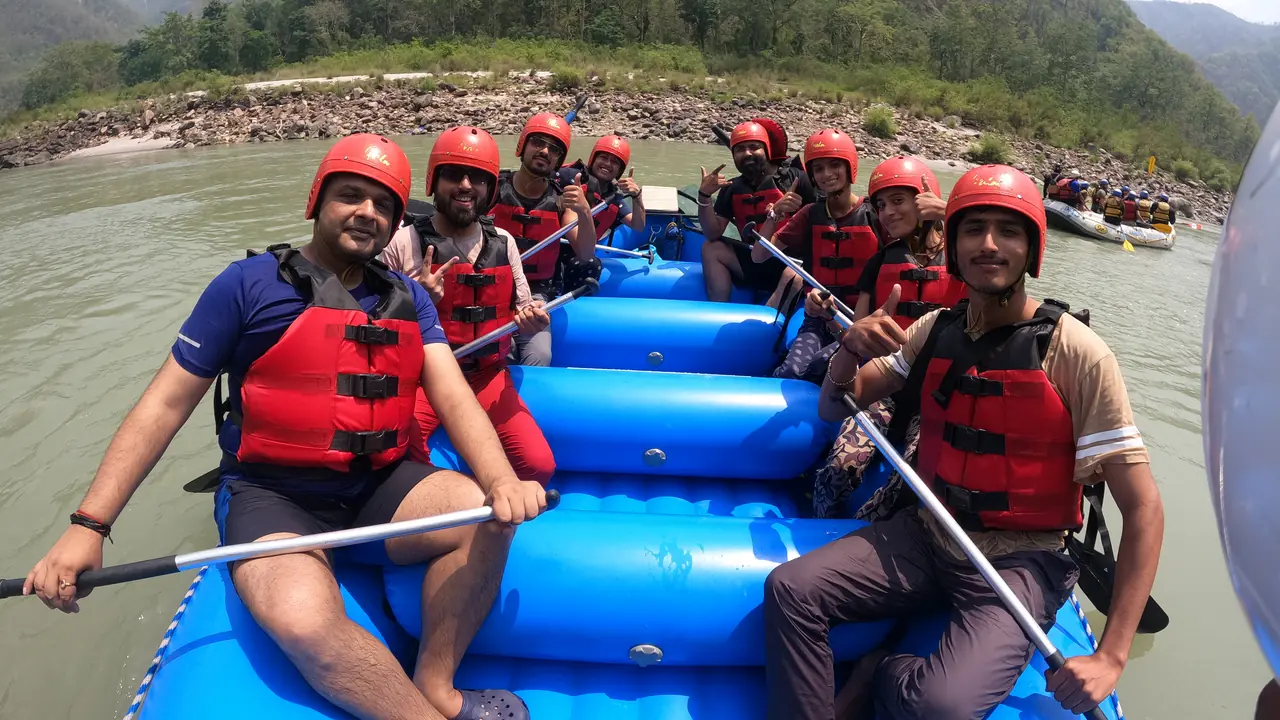
Most first-time rafting nerves come from a simple thing: not knowing what’s going to happen. Once you can picture the shape of the day, the anxiety mostly disappears and the excitement takes over. So this guide walks through your first Rishikesh rafting trip step by step — no hype, no surprises, just what actually happens from the moment you arrive to the ride home.
A quick note: exact timings, route details and what’s provided vary by operator and route. Treat this as the general shape of the day and confirm the specifics with your operator.
Before you go
The trip really starts the night before. Lay out quick-dry clothes and sports sandals with heel straps — not flip-flops, which the river will take. Pack a complete change of dry clothes in a sealed bag, sunscreen, and some cash for photos or tips. Leave watches, jewellery, wallets and anything sentimental at your accommodation. Our full what to wear guide covers this in detail.
Get a decent night’s sleep and don’t over-eat right before — a light meal is better than a heavy one for the drive and the paddling.
Arrival and reporting
You’ll report to your operator’s point at the agreed time. There’s usually some paperwork — a standard consent form — and a place to store valuables. This is also when the group comes together, meets the guide, and gets a first sense of the plan. Arrive on time; groups that run late compress the briefing, which is the one part you don’t want rushed.
Gearing up
You’ll be fitted with a certified whitewater life jacket and a helmet, and handed a paddle sized to you. Take this seriously: the life jacket should feel snug under the arms so it can’t ride up in fast water. If it feels loose, ask for a swap before you launch. The helmet should sit firmly with the chin strap done up. This is your safety gear — make sure it fits.
The safety briefing — the important part
Before you get on the water, the guide gives a safety briefing. This is the most important few minutes of the day, so pay full attention even if you’re eager to start. A good briefing covers:
- The paddle commands — forward, back, stop, and how to lean.
- How to sit and hold on in the raft and through rapids.
- What to do if you fall out — float on your back, feet downstream, toes up.
- How to help someone else back in.
If anything is unclear, ask. Guides would much rather answer a question on the bank than sort out confusion mid-rapid.
On the water
Now the fun starts. The trip alternates between rapids, where the guide calls the paddling and things get splashy and exciting, and calm stretches, where you drift, rest, and take in the canyon. Between the two you get both adrenaline and quiet — it’s a genuinely lovely rhythm.
Expect to get properly wet, and possibly fully soaked on the bigger rapids. That’s normal and part of the experience. On many trips there’s a pause at a safe pool where you can hop in and swim if you want — a highlight for a lot of first-timers. A safety kayaker shadows the raft throughout, ready to help if anyone goes over.
If you do fall out, remember the briefing: stay calm, float on your back, feet downstream, and let the kayaker or a thrown line bring you in. It happens to plenty of people and is usually a non-event.
Take-out and the ride home
The trip ends at the take-out point, where you’ll get out, hand back your gear, and change into your dry clothes — you’ll be glad you brought them. Many operators have a photographer; if you’d like the trip photos, this is where you pay, usually in cash. Then it’s the drive back, tired, wet-haired and grinning.
How you’ll probably feel afterwards
Most first-timers finish somewhere between exhilarated and pleasantly wiped out. Your shoulders may be a little sore from paddling, and your face may catch some sun even if you were careful — reflected glare off the water is strong. Almost everyone’s main reaction is wanting to do it again.
Book it right, and enjoy it
The single biggest thing you can do to make your first trip great is to book with a verified operator — certified gear, a trained guide, a proper briefing, a safety kayaker, GPS-tracked trips. Get that right and the rest of the day takes care of itself.
RaftingX is a marketplace of Rishikesh operators checked in person for exactly those standards. It’s pre-launch, with a full public launch planned for September. In the meantime, for a first trip we can point you to the right verified operator — email info@raftingx.com or message +91 9910-337488 (phone and WhatsApp, same number).
Frequently asked questions
What happens if I fall out of the raft?
It happens and it's usually fine. Your certified life jacket keeps you afloat. The standard response, which your guide covers in the briefing, is to float on your back with your feet pointing downstream and toes up, and wait for the safety kayaker or a line thrown from the raft to bring you in. Staying calm and following the briefing is the main thing.
How long does a rafting trip take?
It depends on the route. Shorter, gentler stretches take less time on the water, while full-day expeditions can take several hours including breaks. Beyond the water time, allow extra for reporting, gearing up, the safety briefing, and transfers. Confirm the total timing for your route with your operator so you can plan the rest of your day.
Will I get wet?
Yes — expect to get properly wet, and possibly fully soaked, especially on the bigger rapids. That's part of the experience. Bring a complete change of dry clothes for the drive back, sealed in a bag, and leave anything you can't afford to get wet or lose at your accommodation.
Ready to plan your trip? Every operator on RaftingX is checked in person for certified whitewater gear, licensed guides and GPS-tracked trips before being listed. See the routes side by side, then book with a verified operator. RaftingX is a verified-operator marketplace — full public launch is planned for September, and bookings are handled directly on WhatsApp in the meantime.
Questions? Email info@raftingx.com or message us on +91 9910-337488 (phone and WhatsApp, same number).
Book on WhatsApp →